
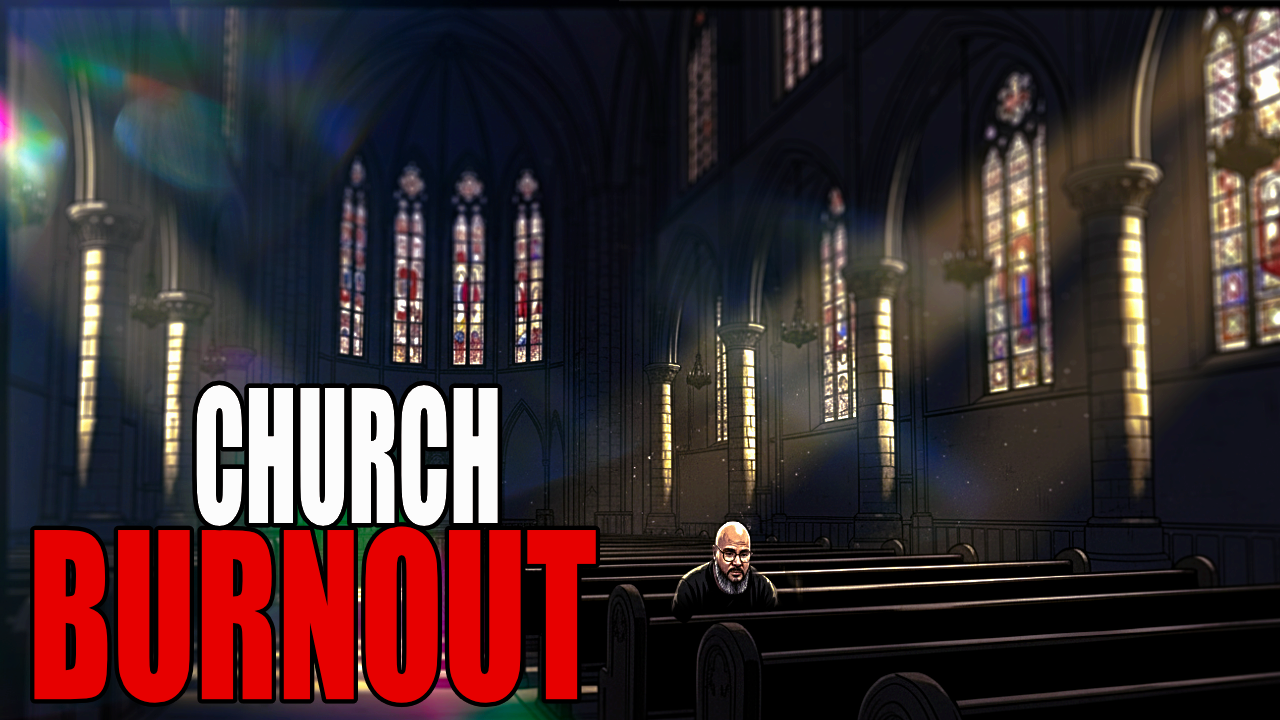
When Pain Meets Silence: The Quiet Beginning of a Faith Crisis
Sometimes drift doesn’t start in the heart—it starts in the mind.
Not with rebellion. Not with sin. But with questions that refuse to stay quiet, no matter how many sermons you sit through.
Have you ever stared at your Bible and felt like you were reading a manual instead of a living word? Have you ever wondered why faith that once felt alive now feels like static? If so, you’re not alone. This isn’t about losing God. It’s about finding Him again—beyond the noise.
When Pain Meets Silence
The Trauma of Unanswered Questions: Doubt Isn’t the Enemy
My drift began in 2020—the year the world felt like it was on fire.
George Floyd’s death wasn’t just another headline; it was a mirror. A painful reminder that “justice for all” was still an unfulfilled promise. I remember sitting at my desk, scrolling, grieving, and angry—and then stunned by the silence of people who claimed to know Christ.
“Stop making it about race.”
“Just preach Jesus.”
Those phrases cut deeper than I could admit. They didn’t sound like love. They sounded like dismissal. And I remember whispering, If love can’t look like lament, what kind of love is it?
That was when my faith started to tremble. I wasn’t losing faith in God—I was losing faith in a system that claimed His name but ignored His pain. It wasn’t a rebellion. It was heartbreak.
In those moments, silence became the loudest sound in my life. The kind of silence that presses on your chest until you can’t breathe. I thought God had ghosted me, but now I realize silence can be sacred. Sometimes it’s the only way He can get a word in.
Doubt doesn’t always mean you’re running from God. Sometimes it means you’re still looking for Him in the ruins.
Unanswered questions are like splinters in the soul.
They start small, but if ignored, they fester. I grew up thinking doubt was a sign of weakness. Now I know it’s a sign of a relationship—you don’t question someone you don’t expect to answer.
I would sit with my Bible open and my heart closed. “God is near to the brokenhearted,” the page said. Then why did He feel a thousand miles away? “Blessed are those who mourn.” Then why did mourning feel like a curse?
Nobody prepared me for the pain of faith that stops making sense. When God’s goodness doesn’t match your grief, or when people use His name to justify indifference—that’s where spiritual trauma begins. Not because God fails, but because humans twist His name to mask their failures.
I learned that faith trauma doesn’t come from too many questions—it comes from too many silences.
From being told that curiosity is rebellion. That grief is ingratitude. That to doubt is to disappoint God. But in truth, shame around your questions is the real enemy of faith.
For months, I hid my doubts. I didn’t want to be labeled “backslidden” or “progressive.” But eventually I stopped trying to defend my faith and started trying to understand it. I wasn’t tearing it down—I was excavating it. Digging through rubble to find what was actually mine.
Deconstruction vs. Drift: Why They’re Not the Same
People often confuse deconstruction with drift.
They’re not the same.
Drift is apathy—it says, “I’m done.”
Deconstruction is hunger—it says, “There has to be more.”
When you deconstruct, you strip away what’s false, hoping something true will remain. It’s terrifying because once you begin, you can’t go back to naïve belief. The door to easy certainty locks behind you. But that’s where authentic faith begins.
As I wrestled, I realized that what’s real doesn’t crumble—only idols do.
Maybe God allows our illusions to collapse so we can finally see Him clearly.
For years, I had confused culture for Christ, certainty for truth, and institutions for intimacy. I had quoted verses like duct tape to hold together a collapsing structure.
Then one day, I finally saw Him—the real Jesus. The brown-skinned rabbi who flipped tables, touched lepers, and loved outcasts. The Jesus who understands pain and injustice firsthand.
I wasn’t drifting away from Him; I was drifting away from the counterfeit version that comforted power but ignored people.
And in that realization, peace began to return—fragile, but real.
Meeting Jesus Outside the Noise: From Ideology to Intimacy
After a couple of years of wrestling, something unexpected happened.
I met Jesus again—outside the noise.
It wasn’t through a sermon or argument. It was through stillness.
Through a presence that didn’t need to explain itself.
I imagined Him sitting beside me in the dark—not fixing, not correcting, just being.
A man of sorrow with scarred hands and kind eyes. A God who knew betrayal and empire and injustice firsthand. And in that moment, I knew—he understood me.
I whispered, “Jesus, are You still here?”
And though there was no sound, I felt peace settle in the room like a sigh. That’s when I realized I hadn’t lost Him; I’d lost the noise around Him.
Micah 6:8 found me that week:
“He has shown you what is good—to do justice, to love mercy, and to walk humbly with your God.”
It was like God condensed His heart into one verse. Justice. Mercy. Humility. That was the Jesus I could follow again—not the performance-based version, but the compassionate one.
Faith stopped feeling like a performance. It became breath.
It became peace that didn’t need to explain itself.
Anchoring the Mind in Faith Again: Rebuilding Without Pretense
“He has shown you what is good — to do justice, to love mercy, and to walk humbly with your God.” ~ Micah 6:8
Rebuilding came quietly, not as revival, but as recovery.
I opened Scripture again—not to prove a point, but to listen. And I began to see it differently: not as a rulebook, but as a rhythm; not as a defense, but as a dialogue.
I stopped praying right and started praying real.
“God, I’m angry.”
“God, I don’t trust people anymore.”
“God, help me believe You’re still good.”
And somehow, those messy prayers drew me closer than polished ones ever did.
Because God isn’t afraid of honesty—He’s afraid of pretense.
Faith that can’t survive questions isn’t faith; it’s fear.
True faith breathes. It expands. It welcomes. It builds tables instead of walls.
Now, when my mind starts to drift again, I don’t panic.
I remember the rhythm of Micah 6:8.
Justice. Mercy. Humility.
Those aren’t just commands—they’re a compass.
Faith is no longer my fortress to defend—it’s my refuge to rest in.
It’s the space where truth and tenderness coexist.
Where I can be fully known and still fully loved.
Faith After the Fire: Living Justice, Mercy & Humility (Micah 6:8)
If you’ve read this far, maybe you’re in the fire too. Maybe your faith feels fragile, your questions loud, and your silence heavy. Let me tell you—you’re not broken. You’re becoming.
Faith after the fire doesn’t look like it used to. It’s quieter, but it’s stronger.
Because it’s no longer built on fear—it’s built on friendship.
I used to think God was fragile.
Now I know He’s not. We are.
And yet, He keeps choosing us anyway.
Faith doesn’t end where questions begin—it evolves there.
Because what’s real doesn’t burn up in the fire. It’s refined by it.
So here’s my invitation: find one safe person to be honest with this week.
Start one brave conversation. Let honesty become your worship and curiosity your prayer.
You don’t need to rebuild overnight. You don’t even need perfect belief.
You just need permission—permission to stay open, to whisper, “Anchor me again.”
And He will. Every time.
Because grace doesn’t need perfection to find you—just permission.
Until next time, remember—don’t just live by default. Live by design… God’s design.

You Are Not Unlucky In Love You Are Patterned – The Truth Be Told Project
#TheDriftSeries #FaithCrisis #Deconstruction #SpiritualJourney #ModernChristianity #Micah6v8 #FaithAndDoubt #RebuildingFaith #TruthBeToldProject
Source: https://www.barna.com/trends/ex-christians-deconstructing/