



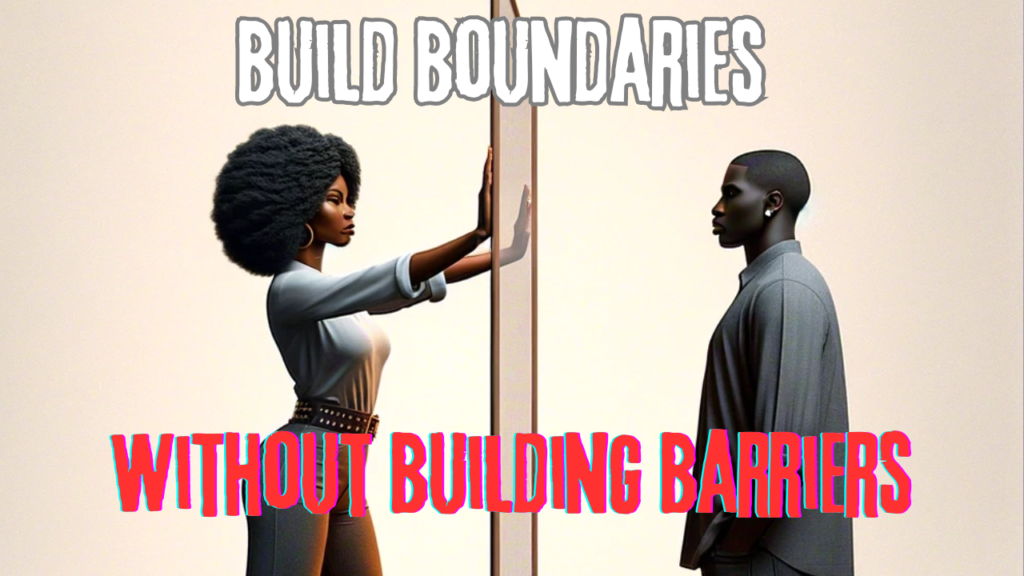
Set Boundaries without building walls.
Even good relationships can feel crappy.
We all cherish those unique connections, but sometimes, even the best relationships can feel cramped. Maybe your best friend or loved one keeps bombarding you with unsolicited life advice, text messages, or d.m.’s. Or your partner’s clinginess leaves you yearning for solitude. You want to get away and take some time for yourself. Enter the crucial, yet often tricky, topic of boundaries. Boundaries have always been rigid for me to set because I have always felt that they create barriers.
It’s imperative to remember that setting boundaries doesn’t mean erecting an emotional ditch. It’s about creating a healthy space, defining your comfort zone, and asserting your needs respectfully. But how do you navigate this dance of self-preservation without stepping on toes or triggering emotional meltdowns? Where do we begin? Here’s your roadmap:
As a Christian man, I have been serving in ministry for years. I said yes to everything that came my way. I suffered greatly because of that mindset. I once thought that establishing boundaries was selfish. Barriers can be suitable for the simple reason that they provide protection. They protect things that need to be protected.
Step 1: Know Your Limits when Setting Boundaries
Start by becoming an architect of your well-being. Ask yourself:
- What drains my energy in relationships?
- What behaviors make me feel disrespected or undervalued?
- What behaviors irritate me?
- What kind of topics do I feel uncomfortable discussing?
- How much time and emotional investment can I comfortably offer (to each person)?
Once you have a clear picture of your needs, it’s time to translate them into concrete boundaries.
Step 2: When Setting Boundaries, Craft Your Message with Care
Remember, the goal is to express your needs, not attack the other person. Ditch accusatory language like “you always…” and embrace “I” statements. For example, instead of saying, “You’re way too clingy,” or “You talk too much,” try, “I need some alone time to recharge after work.”
Specificity is your friend. Please be specific. Instead of a vague “I need more space,” pinpoint what “more space” means. Do you need solo mornings? Phone-free evenings? Articulate your boundaries clearly and directly.
Step 3: Prepare for Pushback (and Practice Grace)
Setting boundaries can trigger confusion and even hurt feelings. Some people are not going to understand. Some may even try to guilt trip you because you have established limits. Don’t shy away from open communication. Listen actively to their perspective, validate their emotions, and reiterate your needs with empathy. Remember, building understanding takes time and patience.
“Setting boundaries can trigger confusion and even hurt feelings. Some people are not going to understand. Some may even try to guilt trip you because you have established limits.” Jay Wilson Jr.
Step 4: Enforce Consistently and with Compassion
Once you’ve established your boundaries, stick to them with gentle firmness. It’s okay to say “no” without guilt and respectfully walk away from situations that compromise your well-being. “No” is a powerful, life-changing word. However, avoid harsh ultimatums; remember, the goal is to find solutions that work for both of you.
Keep in Mind that setting boundaries isn’t about selfishness but self-care.
Establishing healthy parameters creates a foundation for healthier, more fulfilling relationships. Just imagine the stress and anger you will avoid because you have set boundaries. You’re saying, “I respect myself, and I respect you enough to communicate my needs.” And that, my friend, is a clear message worth sending.
So, do what you need to do, boundary-setters! Define your space, nurture your well-being, and watch your relationships flourish, aiding your emotional well-being.
Bonus Tips
- Practice saying “no” gracefully. Start with small things like declining invitations for which you need more energy. Remember, “no” is a powerful, life-saving, life-changing word.
- Don’t apologize for your boundaries. You have every right to them. Do not succumb to the guilt trip some may try to put you under.
- Seek support! Talk to friends, family, or a therapist about navigating challenging conversations.
Remember, setting boundaries is an ongoing process, not a one-time event. Keep the lines of communication open, nurture your self-compassion, and watch your relationships thrive in the space you create.